Daggerboard
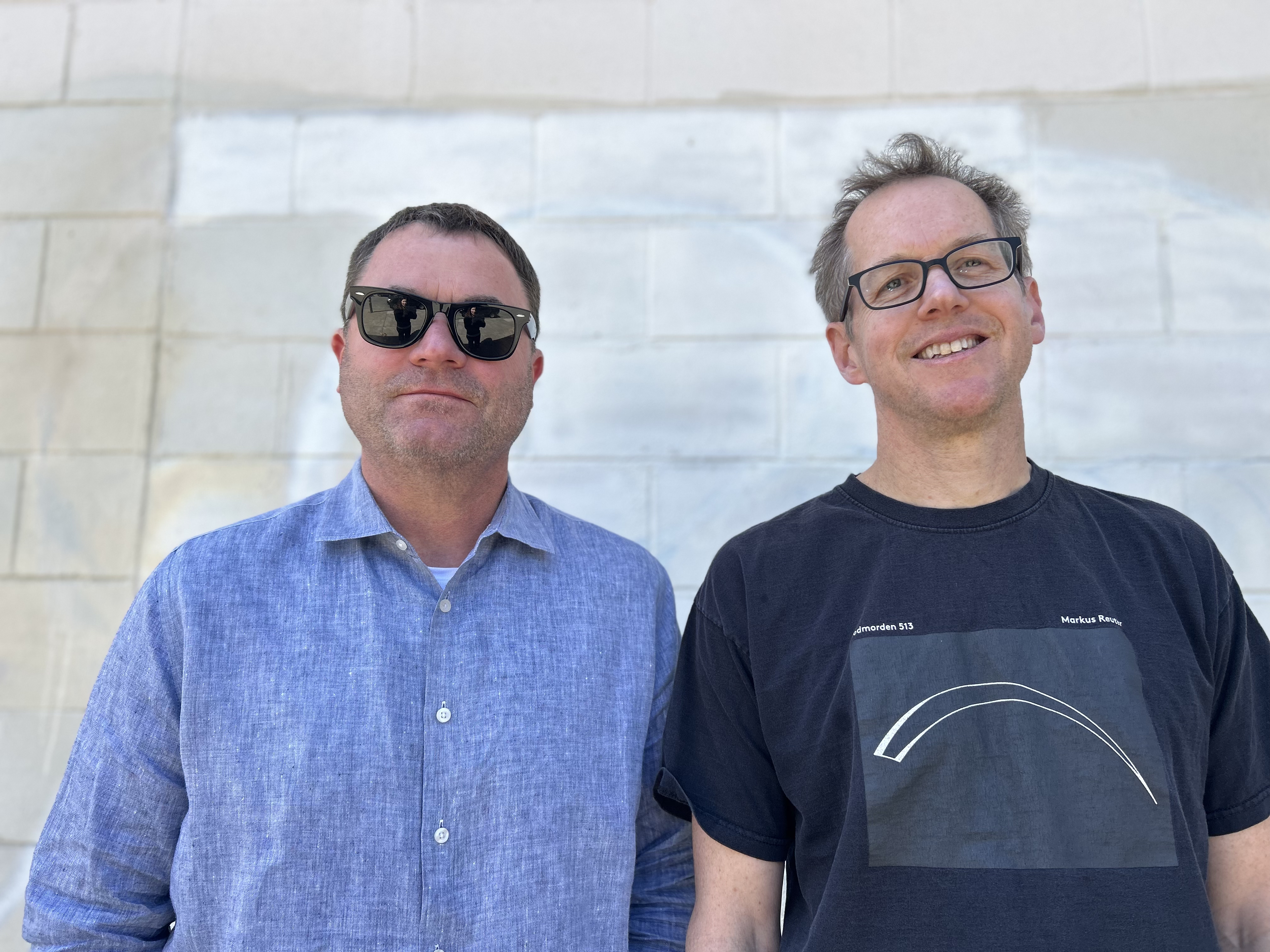
In the nautical realm, the daggerboard is an essential tool that provides a sailboat with stability and navigability. In world of jazz, Daggerboard refers to the prolific collaboration between Erik Jekabson, the Berkeley-bred trumpeter, composer, and arranger who’s been at the center of the Bay Area jazz scene for the past two decades, and Gregory Howe, the composer, multi-instrumentalist, and founder/owner of Wide Hive Records.
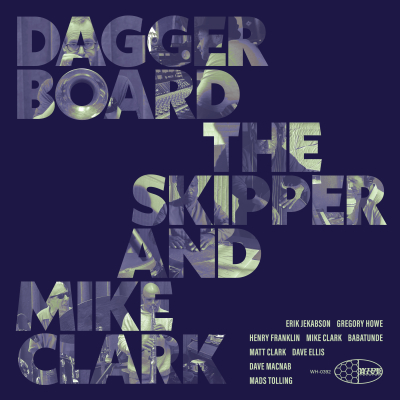
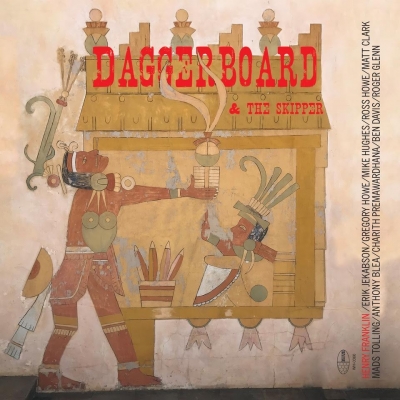
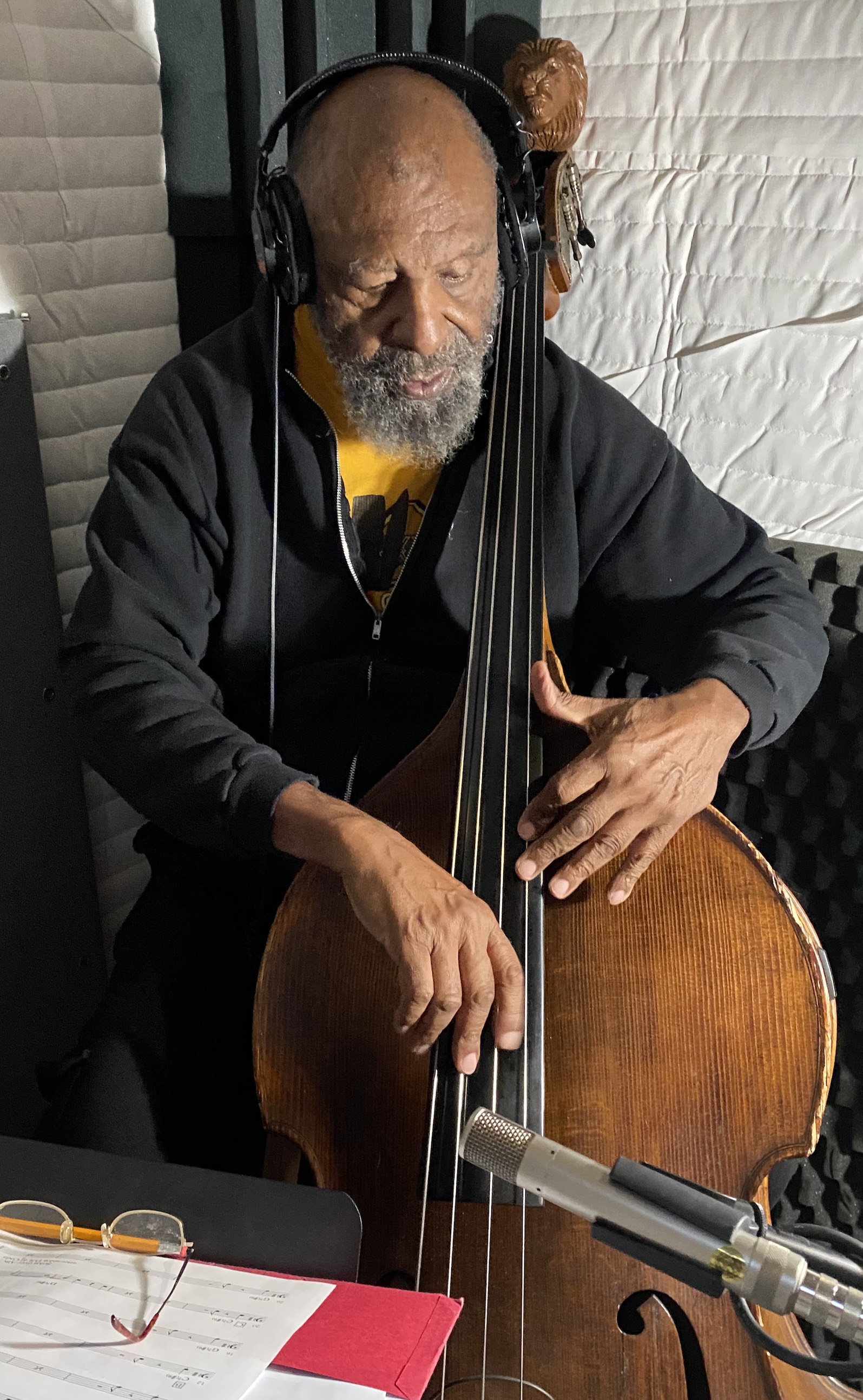
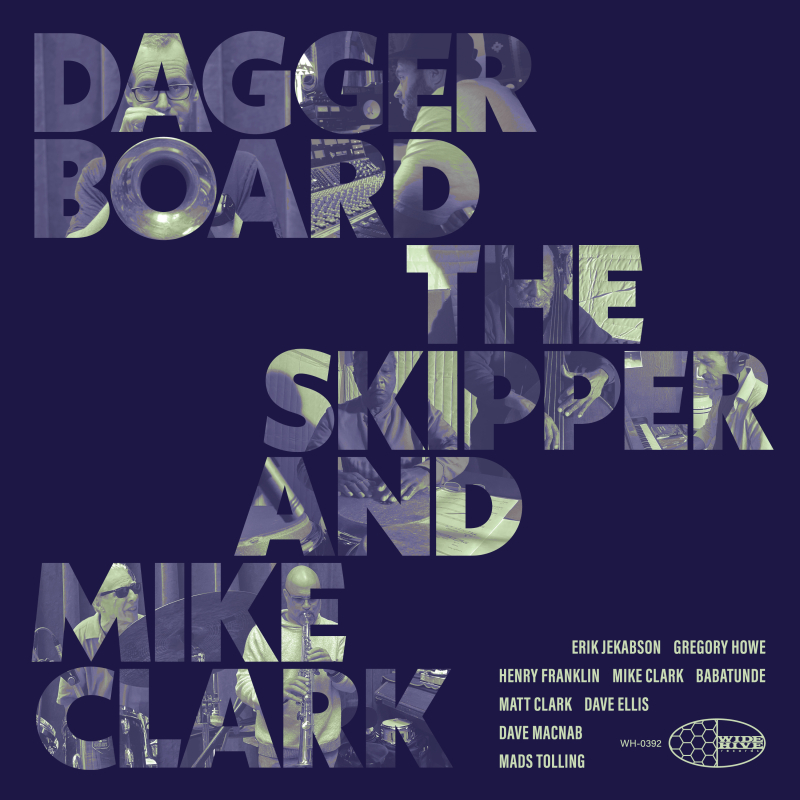
Daggerboard: The Skipper and Mike Clark adds a fiercely grooving, orchestrationally lush new chapter to the ongoing partnership by showcasing the dynamic rhythm section tandem of bassist Henry “The Skipper” Franklin and drummer Mike Clark, two musicians who’ve etched their names in history.
While Clark’s beats on Herbie Hancock’s Headhunters albums Thrustand Flood changed the course of funk, he is at heart a post-bop swinger, an idiom he elevated on 2025’s Itai Doshin and 2023’s Koshin Ruso, critically hailed Wide Hive albums that both feature Franklin. The Skipper is a jazz giant whose stature has sometimes been obscured by his West Coast residence. He’s best known for long stints with two legendary trumpeters, Freddie Hubbard and Hugh Masakela (including the South African bandleader’s 1968 chart-topping hit “Grazing in the Grass”), and his contributions to several seminal albums on the Black Jazz label.
Franklin made his Wide Hive debut on 2022’s Daggerboard & The Skipper. Clark and Franklin forged a close connection back in the 1990s when the drummer divided his time between New York and Los Angeles for several years to deal with family affairs. They connected through pianist Theo Saunders, and immediately struck up a tight bond. “We always could right away play together without saying anything,” Clark says. “I love Skipper. He’s a very close friend and a deep musician. His time is so strong.”
For Howe, who has made it a mission to record veteran jazz masters, the sixth Daggerboard project fits snugly into his overall concept, which involves designing alluring material with Jekabson for a specific cast of artists. He notes that the daggerboard “is part of the boat that lets you fight against the current, go upstream,” and these players generate a powerful wake. The session also features percussionist Babatunde Lea, known for his work with Pharoah Sanders, McCoy Tyner, Joe Henderson, and Mark Murphy, guitarist Dave Mac Nab, and pianist Matt Clark. Dillon Vado contributes vibes on two tracks and saxophonist Dave Ellis plays on three pieces. The Daggerboard charts often draw on the ingenious orchestral palette of Gil Evans.
“My favorite trumpeter and bandleader is Miles,” Jekabson says. “I’m trying to see if I can capture some of that singing quality.”
The album opens with “Desierto de Tabernes,” a mysterious percussion-driven theme with a sinuous feel that unfolds as a 21st-century tribute to the classic 1960 collaboration between Evans and Miles Davis, Sketches of Spain. Jekabson’s artfully layered horn lines flow above and below Matt Clark’s telegraphic single-line solo. From the contemplative “Desierto” the mood brightens considerably with “Changing Emphasis,” a cool, orchestral groover propelled by Mac Nab’s funky guitar work and Ellis’s brawny tenor, a reminder that this formidable Berkeley-raised player is far too little heard from these days.
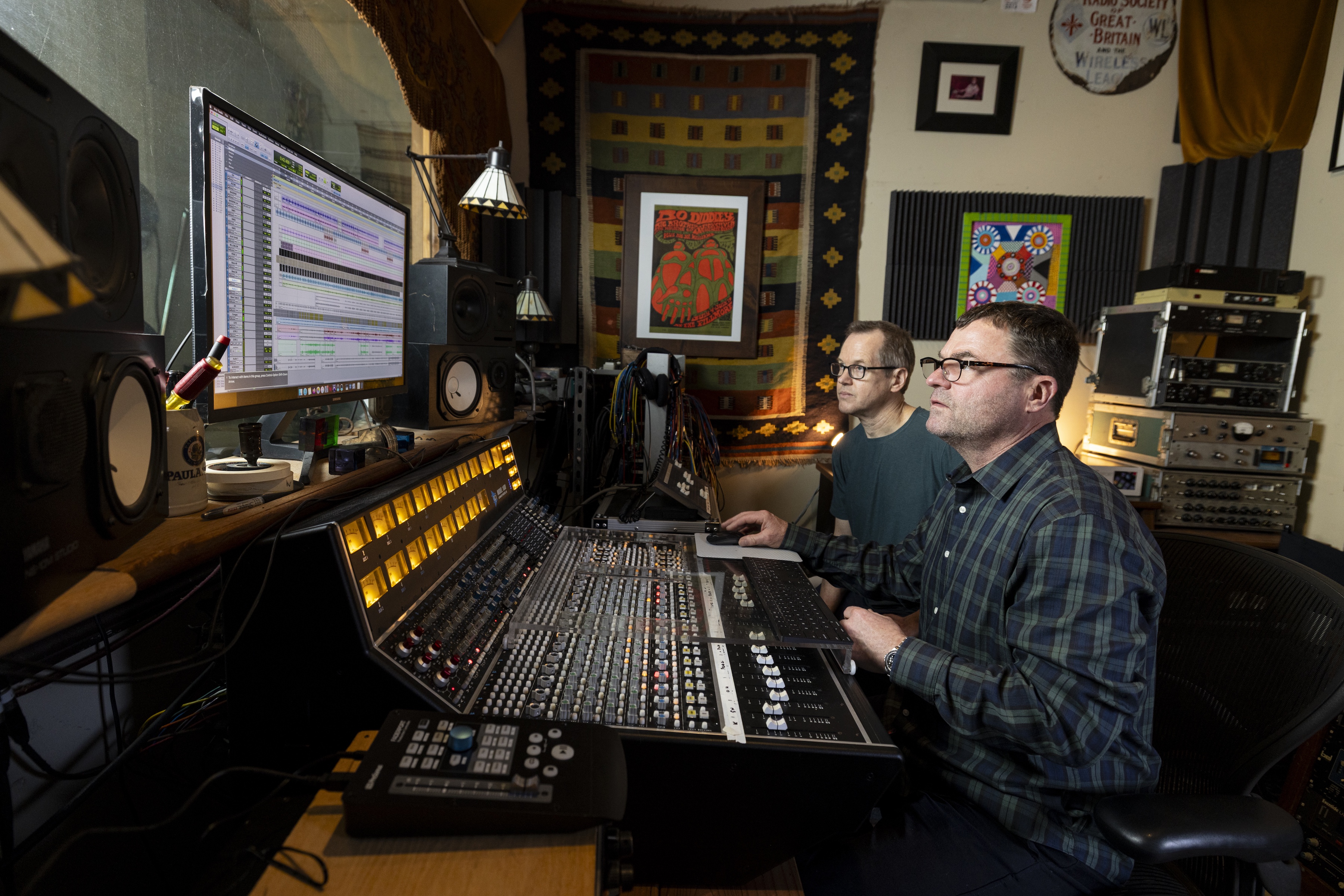
Howe came up with the tune’s intricate rhythmic structure and melody “and then Erik and I bantered it back and forth,” he says, describing their general working process. “I’ve worked with a lot of incredible musicians and Erik is the most literate,” Howe continues. “His ability to harmonize quickly, to create other parts, working on his laptop, you see the piece forming right in front of you.”
Franklin contributed two pieces to the session (with Daggerboard orchestral arrangements), both inspired by recent travels to East Africa. “Tanzanian Skies” is a beatific portrait of a becalmed moment, while the album’s pastoral closer “Ruaha Daybreak” paints a vivid portrait of a dawn that promises discovery and adventure.
“Street Sheik,” based on a concept of Howe’s, is a simmering anthem that showcases Jekabson’s lustrous trumpet tone with another vibe borrowed from “Sketches of Spain.” Ascending on a carpet of percussion and strings, he maintains his fire and poise as the momentum gradually increases and the drums move to the foreground. From one Miles classic to another, “Brother Ranelin” features an irresistible groove straight out of the Filles de Kilimanjaro sessions, an impression exacerbated by Ellis’s lyrical, shorter-ish soprano solo.
The piece is a tribute to the great trombonist and composer Phil Ranelin, who has been widely documented on Wide Hive (including 2011’s Perseverance with Henry Franklin and Big Black).
The ultra-chill “Tranquil Blue” shines a welcome spotlight on Mac Nab, a founding member of the Scott Amendola Band who’susuallytoo busy in Broadway show pit bands to gig much around the Bay Area. Maintaining intensity without increasingly tempo or volume, his solo is followed by a graceful statement by Franklin. Speaking of spotlights, “A Pride in the Prairie” coaxes Mike Clark back into Funkytown as he digs into Howe’s relentlessly grooving setting. Ellis’s soul-steeped soprano sax solo makes this one of the album’s standout tracks. And “Free Lancer” is a straight-ahead swinger that ignited spontaneously in the studio. Based on rhythm changes, it’s a feature for Matt Clark, a first-call cat who’s worked with jazz legends such as Bobby Hutcherson, Benny Golson, Eddie Marshall, Jon Faddis, David “Fathead” Newman, Joshua Redman, and Teddy Edwards.
Daggerboard’s origins can be traced back to an early collaboration between Howe and Jekabson, Throttle Elevator Music, a project that yielded a series of popular albums featuring tenor sax star Kamasi Washington. “Daggerboard” was one of the tracks on the sixth and concluding TEM album Final Floor, “and we loved that tune and we went with it, fighting to create something unconventional,” Howe says.
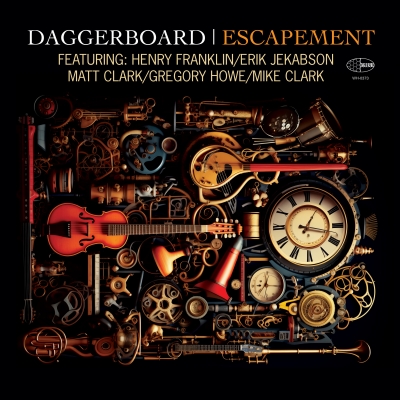
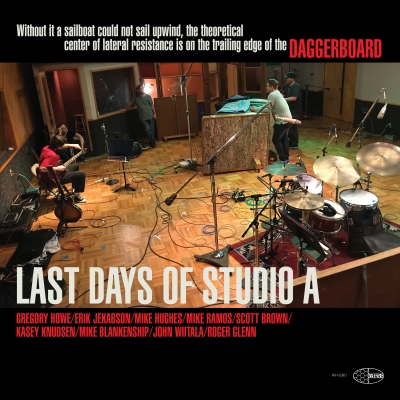
It became the key that opened the door to a fruitful new realm first introduced on 2021’s Last Days of Studio A, a fanfare for the lamented room at Fantasy Studios that featured heavyweights such as keyboardist Mike Blankenship, multi-instrumentalist Roger Glenn,and saxophonist Kasey Knudsen. With 2022’s Daggerboard & The Skipper and 2024’s Escapement, featuring Franklin, Mike Clark, and Matt Clark, the creative ferment between Howe and Jekabson and their Daggerboard collaborators has continued to simmer.
Born in 1969 and raised in Santa Barbara, Gregory Howe fell in love with jazz listening to his father’s record collection. After graduating from Williams College with a double major in politics and environmental science, he relocated from Massachusetts to San Francisco and worked for several environmental organizations, while at the same time he plunged into the Bay Area’s vibrant music scene.He learned about recording back in the analog era and ended up launching Wide Hive while living in the Mission District in 1996 with the album Dissent. A self-taught sound engineer who studied how other studios and technicians got their results, he relocated to Berkeley at the turn of the century and started a remarkable run with albums by a series of jazz giants, including Calvin Keys, Roscoe Mitchell, Phil Ranelin, Larry Coryell, Eddie Henderson, Bill Summers, Gary Bartz,and Patrice Rushen. “I learned the one thing I wanted to do,” he says. “I want to do a record label.” While primarily active as producer, mixer, and composer, Howe is also a prolific musician who performs on guitar, synthesizer, turntable, voice, and percussion.
Born in Berkeley March 23, 1973, Erik Jekabson belongs to a formidable lineage of Berkeley High trumpeters that runs from Steven Bernstein through Jonathan Finlayson and Ambrose Akinmusire. As a member of the class of 1991 he absorbed a huge swath of the jazz continuum, starting with his early love of “Ellington and Basie and all the Blue note stuff with Lee Morgan, Kenny Dorham, and Freddie Hubbard,” he says.
After graduating from Oberlin Conservatory of Music in 1994, he moved to New Orleans, where he co-directed the New World Funk Ensemble and led small combos at iconic jazz spots like Snug Harbor. He also established an international presence, touring in France with the great French organist Eddy Louiss. By 1998 he’d relocated to Brooklyn, where he continued to gain a diverse array of musical experience. He performed with the Illinois Jacquet Big Band, and co-led the quintet Vista with saxophonist Dan Pratt, which released 1999’s potent hard-bop session The Arrival. Outside of jazz he toured with singer/songwriter Amy Kohn, played in the Off-Broadway show The Jazz Singer, and spent a year on the road with pop singer John Mayer. He also released his debut recording, 2002’s Intersection(Fresh Sound/New Talent), a session featuring guitarist Ben Monder, saxophonists John Ellis and Matt Otto, bassist Alexis Cuadrado, and drummer Mark Ferber.
Returning to the Bay Area in 2003 to pursue a Master's Degree at the San Francisco Conservatory of Music, Jekabson quickly made a name for himself as a versatile and dedicated player with a big, warm sound and an aversion to clichés. “I got pretty into classical music at SFCM and had a chance to hang in that world,” he says. “That was pretty inspiring. I didn’t really learn how to write classical forms. My teacher was Elinor Armer and she encouraged me to do whatever I felt like. I leaned into that, that I’m a jazz composer using classical instruments, deeply rooted in my love of Ellington and Basie and my love of different textures.”
Since graduating he’s divided his time between the bandstand and the classroom, serving on faculty at colleges around the Bay Area. Currently he runs the California Jazz Conservatory’s Jazzschool Young Musicians Program. But he’s best known as an inveterately inspired bandleader and composer who regularly works with Grammy-nominated masters like vocalist Kenny Washington and percussionist John Santos. He displayed his deep affinity for New Orleans rhythms on 2010’s Crescent Boulevard with special guests Santos and tenor saxophonist Dayna Stephens, and followed up with 2012’s startlingly beautiful Anti-Mass, a sextet session featuring Stephens and violinist Mads Tolling (a project supported by a grant from the San Francisco Friends of Chamber Music and a commission from the de Young Museum and Intersection for the Arts).
He’s found an ideal outlet on Wide Hive, releasing projects featuring his own band while also serving as a house arranger. Daggerboard continues to develop as he and Howe record a four-part series of orchestral chamber jazz projects for each of the seasons. The Skipper and Mike Clark captures another step in that evolution, a musical adventure that takes well-traveled jazz masters into fresh and stimulating territory.
Erik Jekabson
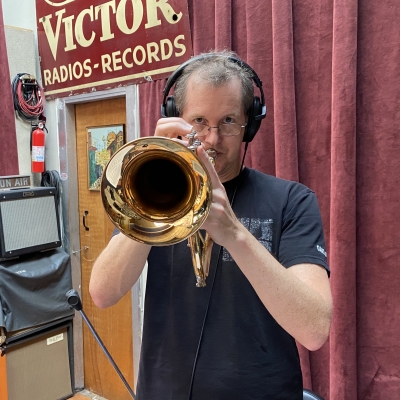
Erik Jekabson is a freelance trumpet player, composer, arranger and educator living in the San Francisco Bay Area. He has toured with Illinois Jacquet, John Mayer, Galactic, and has performed on the Tonight Show with Jay Leno and Late Night with David Letterman.
Gregory Howe
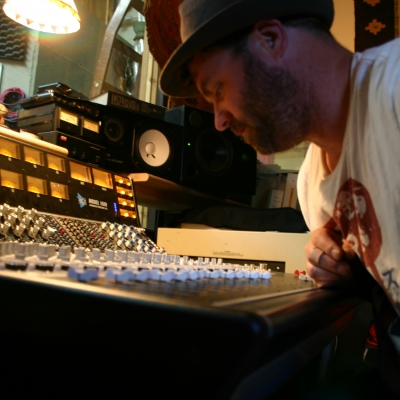
Gregory Howe founded Wide Hive Records in 1996. While primarily active as producer, mixer, and composer, Howe also performs guitar, synthesizer, turntable, voice and percussion on many recordings. From 1996 to 2024 Howe recorded and released albums for Throttle Elevator Music with Kamasi Washington, Roscoe Mitchell, Mike Clark, Dissent, Erik Jekabson, Calvin Keys, Phil Ranelin (Pharoah Sanders, Henry Franklin, Big Black), Wide Hive Players and the incomparable artist and guitarist Larry Coryell.
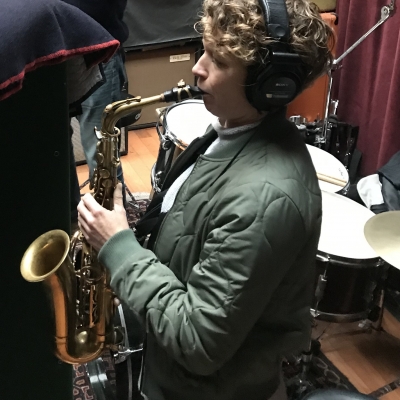
Kasey Knudsen
Kasey Knudsen is a San Francisco-based saxophonist, composer, and educator and leader of the KK Group, a septet focusing on original music and arrangements. She also co-leads The Permanent Wave Ensemble, an octet dedicated to performing and arranging the music of Carla Bley; The RW3 Trio along with bay area drummer Jon Arkin; and The Holly Martins with vocalist Lorin Benedict and guitarist Eric Vogler.
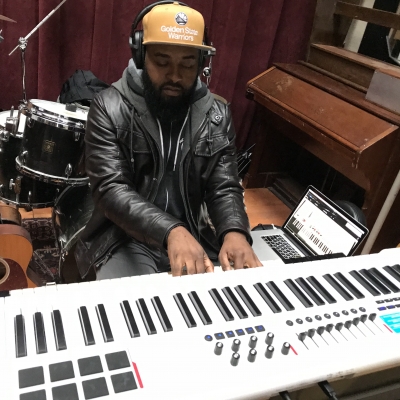
Mike Blankenship
Mike Blankenship is a Bay Area based keyboardist and artist currently composing and performing regularly with Michael Franti and Spearhead. He has also written and performed with Sheila E., Lauryn Hill and Ledisi.
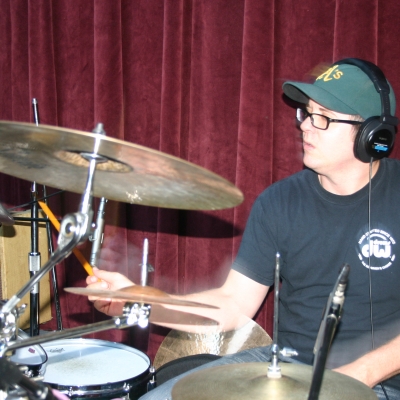
Mike Hughes
Michael Hughes is an American drummer living in the San Francisco Bay Area. He studied drumming at L.A. Music Academy with Joe Porcaro and Ralph Humphrey and spent a decade performing in LA with artists such as Tal Wilkenfeld, Frank Gambale, and Robben Ford. He is the drummer on "Heavy Feel" by Larry Coryell as well as Throttle Elevator Music's "Area J" and "Jagged Rocks" featuring Kamasi Washington.
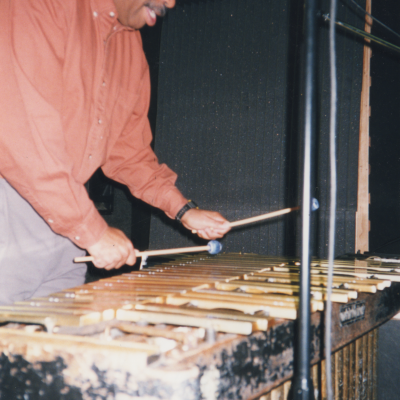
Roger Glenn
Recognized as a master flute and vibraphone player, Roger Glenn has played and recorded with such giants of Jazz and Latin music as Dizzy Gillespie, Mongo Santamaria, Herbie Mann, Cal Tjader and Rosemary Clooney, to name just a few.
Releases by This Ensemble